
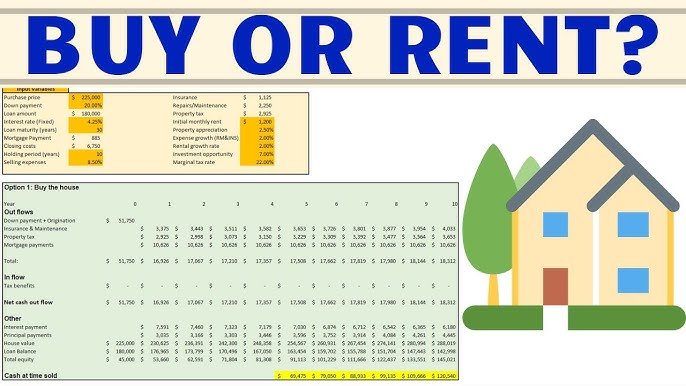
Choosing between buying a home and renting one is a major financial decision, and emotions can easily influence the choice. A buy vs rent calculator can make that decision more practical by comparing the long-term costs of homeownership with the ongoing expense of renting. Instead of relying only on monthly payments or personal opinions, buyers and renters can examine the numbers and understand what each option could mean for their finances.
For celebrities and high-profile professionals, the decision can be even more complicated. Their careers may involve changing cities, irregular income, luxury housing preferences, and demanding schedules. However, the same financial principles apply to anyone trying to determine whether purchasing a property makes more sense than continuing to rent.
Why the Buy-or-Rent Decision Matters
A home is more than a place to live. For many people, it is one of the largest financial commitments they will ever make. Buying can create an opportunity to build equity and benefit from potential property appreciation, but ownership also brings expenses that renters do not normally face.
Renting offers flexibility. A tenant can relocate when a job, relationship, lifestyle, or career opportunity changes without having to sell a property. The downside is that rent payments generally do not create ownership in the home.
The right choice depends on factors such as income, savings, expected time in the property, local housing prices, mortgage rates, maintenance expenses, taxes, insurance, and investment opportunities. Looking at these factors together gives a much clearer picture than comparing rent with a mortgage payment alone.
How a Buy vs Rent Calculator Works
A buy vs rent calculator is designed to compare the financial consequences of purchasing a property with those of renting a similar home over a selected period. Rather than focusing on one monthly figure, a good calculation considers multiple costs and assumptions.
For a purchase, the calculation may account for the down payment, mortgage interest, property taxes, homeowners insurance, maintenance, closing costs, and expected appreciation. It can also consider the equity that builds as the mortgage balance decreases.
For renting, the calculation typically considers monthly rent, expected rent increases, renter-related costs, and the potential investment growth of money that would otherwise have been used for a down payment and purchasing expenses.
This broader approach is important because a mortgage payment is not the complete cost of owning a home.
The Importance of Time
The amount of time you expect to stay in a property can dramatically change the outcome. Buying often involves significant upfront costs, including closing expenses and the down payment. If someone purchases a property and sells it after a short period, those costs may be difficult to recover.
A person planning to stay in the same home for many years may have more opportunity to benefit from building equity and potential appreciation. Someone expecting to move within a few years may find renting more financially convenient.
There is no universal number of years that automatically makes buying better. Local property prices, transaction costs, mortgage conditions, and rental rates all influence the calculation.
Monthly Cost Is Only Part of the Picture
One of the most common mistakes is comparing rent directly with a mortgage payment. For example, if rent is $2,500 per month and the mortgage payment is $2,700, it may appear that buying is only slightly more expensive.
That comparison leaves out several ownership costs.
Homeowners may need to pay property taxes, insurance, maintenance expenses, repairs, homeowners association fees, and other property-related charges. They also have money tied up in the home’s down payment rather than available for other investments.
A thoughtful buy vs rent calculator brings these factors together so the comparison reflects the actual economic cost of each decision.
The Hidden Cost of Homeownership
Homeownership can provide valuable benefits, but it also comes with responsibilities. Roof repairs, plumbing problems, appliance replacements, landscaping, and other maintenance needs can create unexpected expenses.
Property taxes and insurance can also change over time. Depending on the location and property type, these costs may represent a significant portion of the overall ownership expense.
There is another cost that is harder to see: opportunity cost. A large down payment could potentially have been invested elsewhere. When evaluating buying versus renting, that potential investment growth should not simply be ignored.
Equity Changes the Equation
The major financial advantage of buying is the opportunity to build equity. With each mortgage payment, a portion may reduce the outstanding loan balance. Over time, the homeowner can own a larger share of the property.
If the home’s value increases, the owner’s equity may grow further. However, appreciation is not guaranteed. Property values can remain flat or decline, and homeowners can also face selling expenses when they eventually move.
This is why calculations should use reasonable assumptions rather than treating future appreciation as certain.
Renting Can Be a Strategic Choice
Renting is sometimes described as throwing money away, but that argument is too simplistic. Rent pays for housing, flexibility, and the ability to avoid many responsibilities associated with ownership.
A renter may also keep more money available for investments, emergencies, business opportunities, education, or other financial priorities. Someone with a mobile career may place considerable value on being able to relocate quickly.
For entertainers, athletes, executives, entrepreneurs, and other professionals whose careers may require frequent moves, flexibility can have real financial value.
Renting can therefore be a deliberate financial strategy rather than a temporary alternative to homeownership.
What Celebrities Can Teach About Housing Decisions
Celebrity lifestyles often make headlines because of expensive mansions, luxury apartments, and impressive real-estate portfolios. Yet even wealthy individuals need to evaluate property decisions carefully.
A celebrity may purchase a home for privacy, security, prestige, convenience, or long-term investment rather than simply because buying is cheaper than renting. Another may rent a luxury residence because their work requires frequent travel or because they do not want capital tied up in a particular market.
These examples highlight an important principle: the financially sensible choice depends on personal circumstances.
Someone with an ordinary income should not copy a celebrity’s housing decision simply because the property appears successful or desirable. The numbers, priorities, and time horizon are different.
How to Make the Calculation More Realistic
The quality of the result depends heavily on the assumptions entered. Start with realistic information rather than optimistic predictions.
Use the actual expected purchase price, available down payment, mortgage rate, property taxes, insurance costs, and reasonable maintenance estimates. For renting, use current market rent and a realistic assumption for future increases.
It is also useful to test several scenarios. Consider what happens if property values grow slowly, remain stable, or decline. Consider higher maintenance expenses or changing rent. Looking at multiple possibilities can reveal whether a decision remains financially reasonable under less favorable conditions.
A buy vs rent calculator should support your judgment, not replace it.
Lifestyle Matters Too
Financial calculations are important, but housing decisions are not purely mathematical.
Buying may provide stability, privacy, customization, and a sense of permanence. Renting may provide convenience, flexibility, fewer maintenance responsibilities, and easier relocation.
Someone who values a predictable long-term home may accept higher ownership costs because the lifestyle benefits are worth it. Another person may prefer the freedom to move whenever circumstances change.
The best decision balances financial reality with the way you actually live.
Questions to Ask Before Choosing
Before committing to either option, think carefully about your expected length of stay, financial stability, emergency savings, career plans, and tolerance for housing-related responsibilities.
Consider whether a large down payment would leave you with enough cash for emergencies. Think about how comfortable you would be handling unexpected repairs. If renting, consider whether you will consistently invest the money you save instead of spending it elsewhere.
These questions can reveal information that a simple monthly comparison cannot.
Frequently Asked Questions
Is buying always better than renting?
No. Buying can be beneficial over a long period, particularly when ownership costs are reasonable and the property is expected to retain or increase its value. Renting can be preferable when flexibility is important, housing prices are high relative to rents, or the renter expects to move within a relatively short period.
What information should I use in a rent-versus-buy calculation?
Use realistic figures for home price, down payment, mortgage rate, taxes, insurance, maintenance, closing costs, rent, expected rent increases, investment returns, and the number of years you expect to stay. The more realistic the assumptions, the more useful the comparison becomes.
Does a calculator guarantee the correct decision?
No. A calculator provides an estimate based on the information entered. Future interest rates, property values, rent prices, maintenance expenses, taxes, and investment returns can change. The result should therefore be treated as a planning tool rather than a guarantee.
Why is the down payment important?
The down payment affects the size of the mortgage, upfront cash requirements, and the amount of money that could otherwise be invested. A larger down payment can reduce borrowing costs, but it also means more of your wealth is tied up in the property.
Can renting actually be financially smarter?
Yes. Renting can make financial sense when it costs significantly less than comparable ownership, when a person expects to move frequently, or when the renter can invest the difference effectively. The outcome depends on the specific numbers and circumstances.
Final Thoughts
The decision to buy or rent should never be reduced to a simple question of whether mortgage payments are higher or lower than monthly rent. A buy vs rent calculator provides a more complete way to examine the financial trade-offs by considering ownership costs, rental expenses, equity, investment opportunities, and the length of time you expect to stay.
For celebrities, professionals, and everyday households alike, the smartest housing decision is the one that fits both the finances and the lifestyle. Buying can offer stability and the possibility of building equity, while renting can provide flexibility and financial freedom. By examining realistic numbers, considering different scenarios, and understanding the long-term consequences, you can make a housing decision based on evidence rather than pressure or assumptions.